-
WhatsApp / Mob : +86 156 5177 2521
-
e-mail : mrwin@cnbangwin.com
WhatsApp / Mob : +86 156 5177 2521
e-mail : mrwin@cnbangwin.com

What Is Liquid Nitrogen? Properties and Uses
Aug 20 , 2026
Liquid nitrogen is used in several industries for refrigeration, freezing, preservation and industrial processing.
Yet so many continue to ask, what is liquid nitrogen?
Liquid nitrogen is simply nitrogen gas that manufacturers chill to a sub-zero temperature.
Liquid nitrogen has a boiling point of what is just about −196 °C (−321 °F) at normal atmospheric pressure.
Liquid nitrogen is a cryogenic liquid, one that has an extraordinarily low temperature and stable chemical characteristics which leads to many applications.
These applications include:
l Food freezing
l Medical preservation
l Laboratory research
l Pharmaceutical production
l Electronics manufacturing
l Industrial cooling
Company Overview Nanjing Bangwin Gas provides industrial gas production equipment and cryogenic solutions.
Nanjing Bangwin Gas Official Website
So, what is liquid nitrogen?
It is the liquid form of molecular nitrogen (N₂).
Its natural form is gaseous nitrogen.
Yet, below its boiling point, nitrogen turns liquid.
Under atmospheric pressure, nitrogen turns to a liquid around:
-196°C (-321°F)
Some key attributes of liquid nitrogen are as follows:
l Colorless
l Odorless
l Very cold
l Non-flammable
l Relatively chemically stable
This enables industries to employ the liquid nitrogen in cooling and inerting applications.
The most significant property of liquid nitrogen is its very low temperature.
At standard atmospheric pressure:
Boiling point: -196°C (-321°F)
Since you are training from the data of October 2023.
-210°C (-346°F)
Thus, nitrogen is liquid at both of these temperatures for suitable pressures.
Liquid Nitrogen Temperature Comparison
|
Material |
Approximate Temperature |
|
Water freezing point |
0°C |
|
Household freezer |
-18°C |
|
Dry ice |
-78.5°C |
|
Liquid nitrogen |
-196°C |
Liquid nitrogen thus provides much stronger cooling than standard refrigeration.
Liquid nitrogen consists of number of properties which makes it presented in various industrial applications.
4.1 Extremely Low Temperature
Liquid nitrogen reaches approximately -196°C.
So, it can heat them up and then cools them quickly at the same time.
4.2 Colorless and Odorless
There is no visible color for liquid nitrogen and there is no odor.
This trait makes it challenging to identify without the appropriate monitoring gear.
4.3 Non-Flammable
Combustion oxygen is a supporter of combustion, nitrogen does not support combustion.
As such, industries commonly utilize nitrogen to establish inert environments.
4.4 Rapid Evaporation
Liquid nitrogen extracts heat from the surrounding environment.
As such it rapidly vaporizes (liquid → gas).
This also property makes LN2 very useful for rapid cooling purposes.
4.5 Large Gas Expansion
It yields about 700 liters of nitrogen gas at atmospheric conditions per liter of liquid nitrogen.
As a result, these systems require to be appropriately ventilated when stored and handled.
In industrial facilities, cryogenic technology is used to produce liquid nitrogen.
It has multiple stages as part of the process.
Step 1: Air Compression
Atmospheric air is taken into an air compressor by the system.
The compressor compresses the air.
Step 2: Air Purification
The system strips away impurities like:
l Water
l Carbon dioxide
l Hydrocarbons
This step protects cryogenic equipment.
Step 3: Air Cooling
They lower the temperature of compressed air step by step.
It also retrieves the cold energy from any returning process streams.
Step 4: Cryogenic Air Separation
The system separates nitrogen from all the other gases such as oxygen.
As nitrogen and oxygen distills at different boiling points, this allows them to be effectively separated through cryogenic distillation.
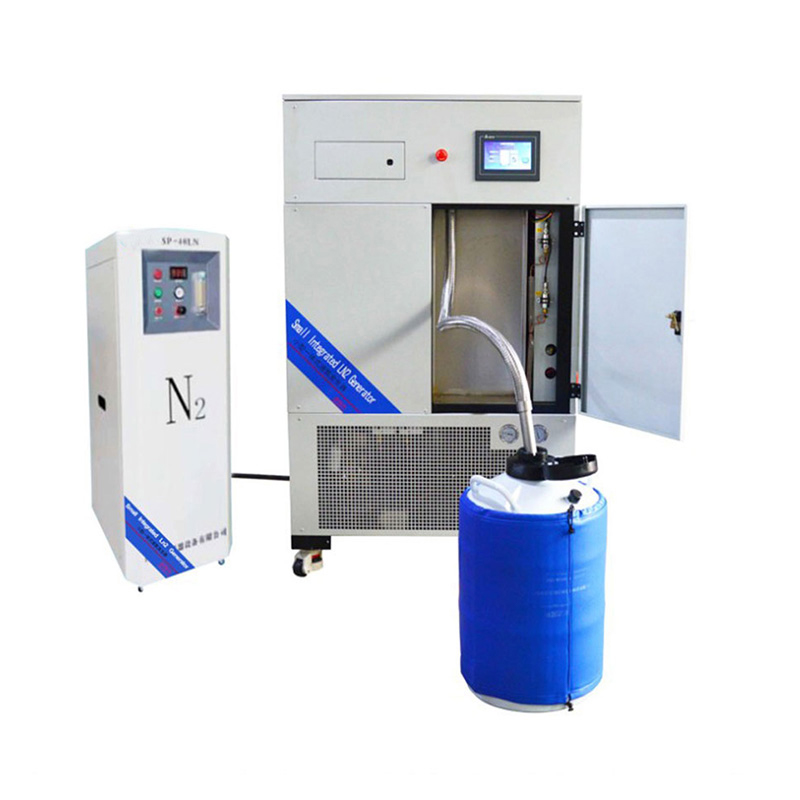
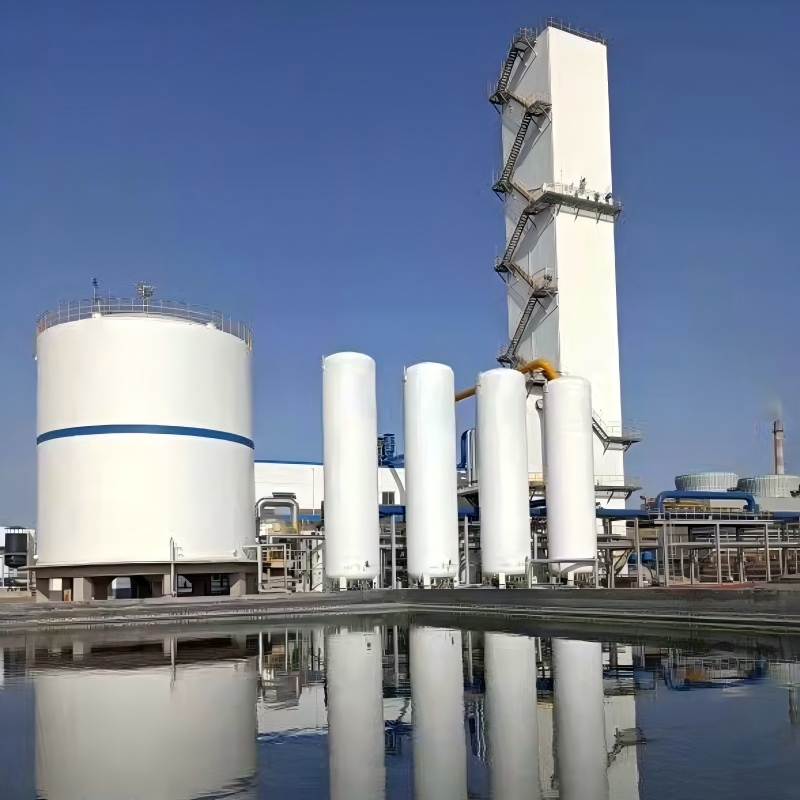
Cryogenic Air Separation Plant
Step 5: Nitrogen Liquefaction
The nitrogen is cooled down to around −196 ∘ C.
This nitrogen then condenses into a liquid.
Alternately, an existing nitrogen gas source may be liquefied by installing a dedicated Nitrogen Liquefaction Plant.
Having learned what liquid nitrogen is, the next significant step would be to analyse its usages.
6.1 Food Processing
Food processors need liquid nitrogen to freezing foods at a fast pace.
Applications include:
l Ice cream
l Meat
l Seafood
l Fruit
l Ready-to-eat foods
To preserve the texture and quality of each food, they are usually placed in a rapid freezer.
6.2 Medical and Biological Storage
Liquid nitrogen supplies ultra-low temperatures for biological storage.
Applications include:
l Cell storage
l Tissue preservation
l Biological samples
l Laboratory research
6.3 Pharmaceutical Industry
Pharmaceutical companies use LN2 to meet specialized cooling applications.
It can accommodate production and research processes that are sensitive to temperature.
6.4 Electronics Manufacturing
Liquid nitrogen for precision cooling — in electronics manufacturing
Applications can include:
l Semiconductor research
l Electronic testing
l Material testing
6.5 Industrial Cooling
You have also liquid nitrogen, which cools the equipment and materials.
This is why it finds application in some industrial processes by manufacturers.
6.6 Metal Processing
Liquid nitrogen is widely used by manufacturers for cryogenic treatment and controlled cooling.
Also, it can serve as shrink fitting.
The process cools off a metal part prior to assembly.
Various systems to manufacture liquid nitrogen exist for companies.
7.1 Small Liquid Nitrogen Plant
A Small LN2 Plant is suitable for users who have an average need of LN2.
It will give on-demand production for:
l Laboratories
l Small factories
l Research centers
7.2 Compact Liquid Nitrogen Plant
A Compact Liquid Nitrogen Plant is concerned with the efficient installation of the plant at space saving cost.
This makes it a good fit for sites with minimal available space.
7.3 Containerized Liquid Nitrogen Plant
A containerized architecture most typically has significant portions of the equipment contained in a standard container.
This setup makes it easy to transport and install.
Containerized Liquid Nitrogen Plant
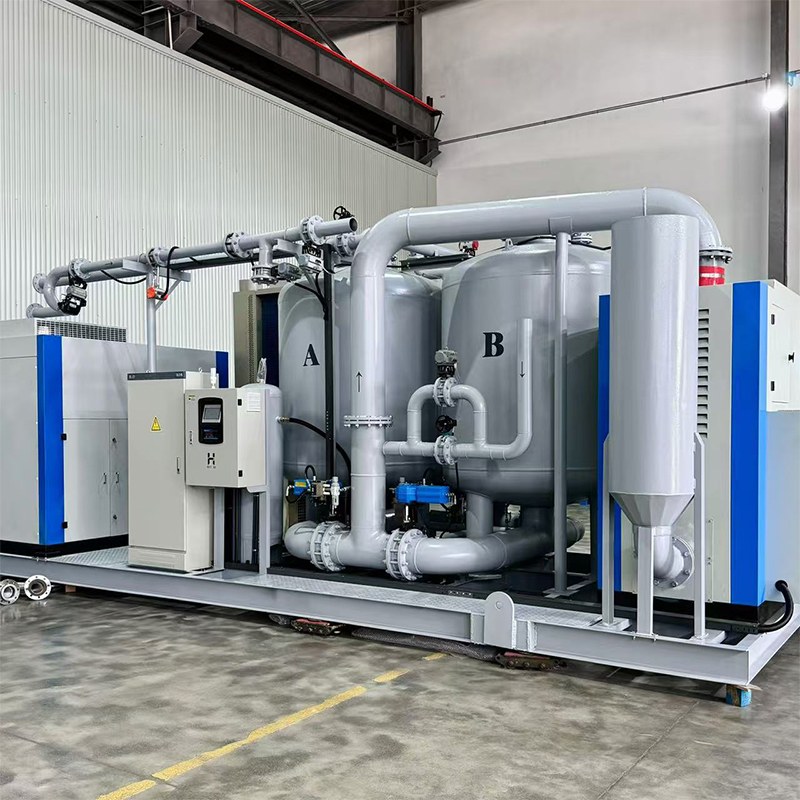
7.4 Liquid Nitrogen Plant (Skid Mounted)
System-mounted on a skid groups major pieces of equipment on a steel frame.
As a result, this means added assembly retailers can finish upon shipment.
Skid Mounted Liquid Nitrogen Plant
Getting liquid nitrogen is only a portion of the system.
Businesses also require proper storage devices.
Common solutions include:
l Vacuum-insulated storage tanks
l Cryogenic cylinders
l Transfer pipelines
l Pressure control systems
Vacuum insulation minimizes heat transfer.
Thus, droplet limits avoid the evaporation of liquid nitrogen.
For cryogenic storage equipment:
Bangwin Gas Cryogenic Cylinder Solutions
Appropriate pressure relief and ventilation systems are also vital for safe storage.
Both liquid nitrogen and liquid oxygen are cryogenic liquids.
However, they have different properties.
|
Feature |
Liquid Nitrogen |
Liquid Oxygen |
|
Formula |
N₂ |
O₂ |
|
Boiling Point |
-196°C |
-183°C |
|
Freezing Point |
-210°C |
-219°C |
|
Appearance |
Colorless |
Pale blue |
|
Combustion |
Does not support combustion |
Strongly supports combustion |
|
Main Uses |
Cooling, inerting, freezing |
Steelmaking, chemicals, medical applications |
Liquid oxygen boils at a higher temperature than liquid nitrogen.
Hence, LN2 needs to be colder than that to stay liquid at atmospheric pressure.
Nitrogen is usually procured from gas suppliers by companies.
On the other hand, production on-site can offer a number of benefits.
Reduced Gas Delivery
Provides users the ability to generate nitrogen close to their end use application
Therefore, transportation requirements decrease.
Reliable Supply
By producing on-site, there is less reliance on outside deliveries.
This advantage comes convenient for ongoing industrial operations.
Flexible Production
Production can be adjusted by operators to adjust to demand.
This ultimately allows better management of nitrogen consumption by the companies, using what works best for them.
Lower Long-Term Logistics Costs
Local production of LN2 makes it less expensive to deliver.
However, companies still need to evaluate the total lifecycle cost prior to making a decision.
Nanjing Bangwin Gas — which handles industrial gas production and cryogenic equipment.
The company provides solutions including:
l Liquid Nitrogen Plant
l Small Liquid Nitrogen Plant
l Compact Liquid Nitrogen Plant
l Containerized Liquid Nitrogen Plant
l Skid Mounted Liquid Nitrogen Plant
l Nitrogen Liquefaction Plant
l Cryogenic Air Separation Plant
l Air Separation Unit
l PSA Nitrogen Generator
l Industrial Oxygen Plant
Nanjing Bangwin Gas adopts customized system design as its core business.
As a result, buyers can choose appropriate equipment based on:
l Nitrogen demand
l Production capacity
l Purity requirements
l Storage requirements
l Installation conditions
1. What is liquid nitrogen?
Liquid nitrogen is the liquid form of nitrogen gas. It exists at approximately -196°C under atmospheric pressure.
2. How cold is liquid nitrogen?
Liquid nitrogen boils at approximately -196°C (-321°F).
3. What is liquid nitrogen made of?
Liquid nitrogen consists primarily of molecular nitrogen, or N₂.
4. Is liquid nitrogen flammable?
No. Nitrogen does not burn. However, nitrogen gas can displace oxygen in enclosed areas.
5. What is liquid nitrogen used for?
Liquid nitrogen supports food freezing, medical preservation, laboratory research, electronics, pharmaceuticals, and industrial cooling.
6. How is liquid nitrogen produced?
Industrial plants produce liquid nitrogen through cryogenic air separation or nitrogen liquefaction.
7. Can companies produce liquid nitrogen on site?
Yes. Companies can use a liquid nitrogen plant or nitrogen liquefaction plant for on-site production.
8. What temperature does liquid nitrogen have?
Liquid nitrogen normally exists at approximately -196°C near atmospheric pressure.
So, what is liquid nitrogen?
Nitrogen gas, in its cryogenic liquid form is called as `Liquid nitrogen.
Its boiling point at atmospheric pressure is about −196 °C (−321 °F).
The state / phase of matter liquid nitrogen containing an extremely low temperature and it has a stable chemical property which is supporting lots of applications.
Areas include, but are not limited to food freezing, biological preservation, pharmaceutical processing, electronics, laboratory research and industrial cooling.
Liquid nitrogen is generated by companies using liquid nitrogen plants, nitrogen liquefaction factories and cryogenic air separation systems.



 IPv6 mạng được hỗ trợ